

From productivity to serenity, part 2: Serene Performance is the new peak productivity
This article is part two of a series about “Serene Performance”.
We explore a universal framework that helps to achieve progress on your goals while keeping a calm state of mind, putting an end to unproductive stress and hustle.
If you haven’t yet read part 1 of this series, read this first: Part 1.
What on earth is “Serene Performance”?
Serenity is a state of mind somewhere in the middle between numbness and stress.
It is calm enough to feel at ease yet sufficiently agitated to feel a drive that sets you in motion. It’s the goldilocks spere where your brain is engaged but not under unhealthy pressure.
Performance is progress in a determined direction. It’s a forward movement, not just erratic hustle.
Serene Performance is a sustainable state between boredom and burnout that feels natural and friendly. It’s ambitious yet relaxed, focused yet flexible.
But first: What it’s not
I once had an ambition: I wanted to learn to cook – I mean really cook. Some of my friends are masterful chefs, intuitive artists in the kitchen, and I’m lucky that they invite me to their tables now and then.
There was a time when I wanted to learn what they could do, to reach their level of skill and ease. So I “trained” – I experimented, studied recipes, and watched tutorials on sophisticated techniques. And though I enjoyed parts of it, something felt off. I didn’t love it as much as I’d imagined.
One day, I realized I was on a quest I couldn’t win.
It wasn’t just about lacking skill – anyone can learn to follow a recipe – it was about lacking talent. I don’t have much creativity in the kitchen, and striving for mastery felt like setting myself up for failure. I had chased “performance” and lost all serenity along the way.
But I also noticed something else: joy in cooking doesn’t come from sophistication, but from intention. Competing with my chef friends was never the point – and trying to do so only took the joy out of it.
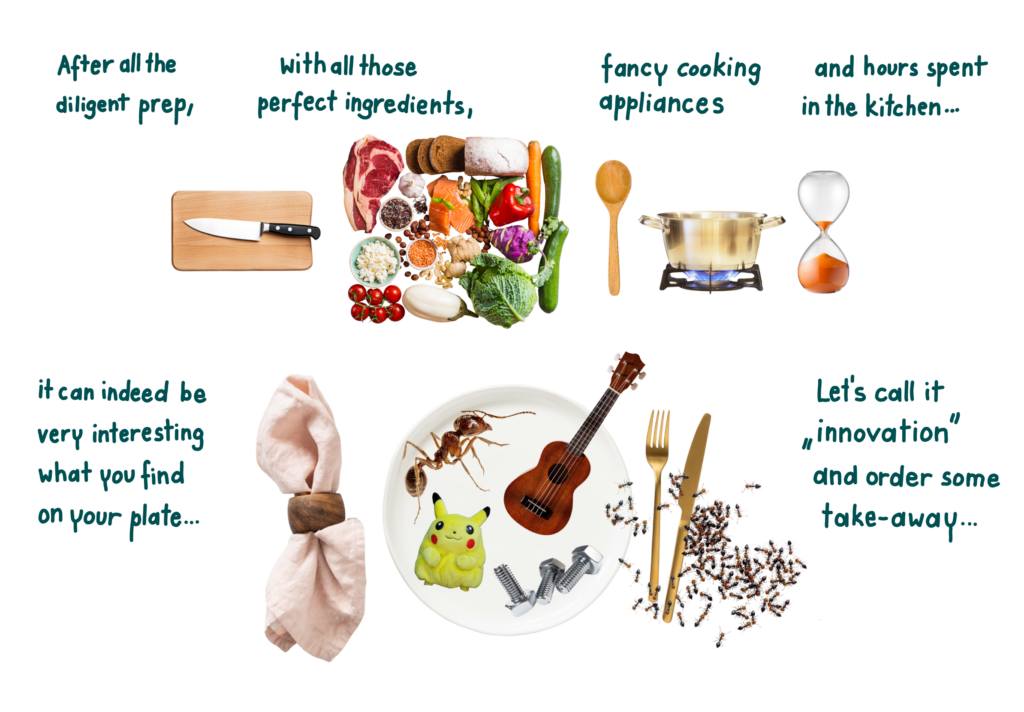
A favorite meal with 3 ingredients
And this leads to the first ingredient of Serene Performance: Intention.
Intention is a deliberate mental focus or purpose, a calm, mindful and centered guide. Intention is the answer to the question “what for”.
But intention alone does not produce much progress. Intention alone is like daydreaming, a desire without action.
So, let’s give intention some company: Ownership.
Ownership is a mindset of self-reliance, a deep feeling of responsibility. In a way, ownership is an ultimate form of freedom: Freedom from expectations, blame, and disappointments.
Ownership is the deep understanding that the key for making things happen lies within us.
Intention tells you what you want, and ownership activates the energy to make it happen.
You are on a good way already. But still, one further ingredient is missing.
Intention and ownership alone may lead to ineffective struggle if you are lacking the skill to execute what you intend and take action to do.
The ingredient we are looking for is: Mastery.
Mastery is the skill to execute effectively. Mastery combines knowledge and skill, a deep understanding of how things work and the gift to apply theory to practice.
Serene Performance = Intention + Ownership + Mastery.
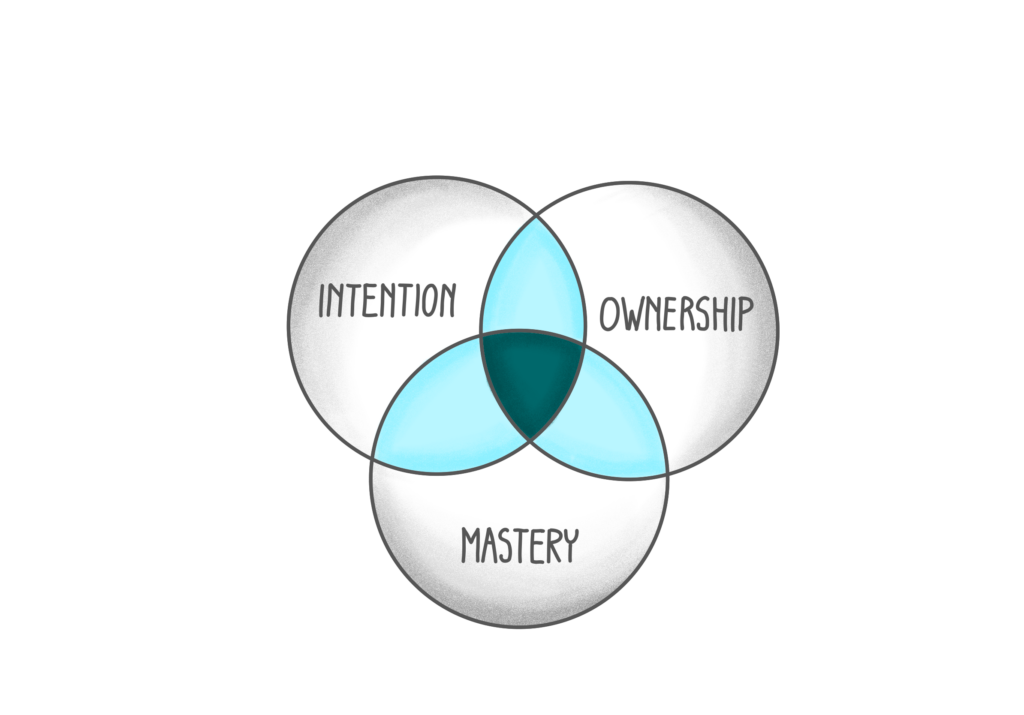
Let’s go unpack.
Serene Performance: A framework to achieve calm and steady progress
Imagine working with complete clarity, confidence, and flow. Your efforts are both highly effective and deeply fulfilling. This is how Serene Performance feels.
It’s a state where productivity feels effortless.
Instead of gritting your teeth while doing hard work, you have a smile on your face.
To achieve Serene Performance, you need a good balance of three elements:
You need all three.
If one of those elements are missing, you find yourself in struggle, frustration, or wasted potential.
Swing low, sweet chariot
I’m coming home for Christmas. My family is gathering in my mom’s house. At Christmas Eve, we drive to a little village nearby to take part in the Christmas service. The church is filled to the brim with people chattering, smiling. There is an inner glow. The world is in peace.
Service starts with an introduction: We have the pleasure to welcome a singer and her band who will perform thorough the evening, contributing some gems from their large repertoire that fit the occasion. What follows is a long list of accolades, and praise, and remembrance of previous performances. The audience applauds.
The band starts to play, a violin opening with a timid and tender sound, soon joined by a clarinet and a base. The audience is still – listening, expecting.
And then she sings. “Swing low, sweet chariot. Coming for to carry me home…”
She has a very beautiful voice. Clear like a spring, a little rough in the undertones.
And then I cringe… What was that…?
“Swing low, sweet chariot…”
I am irritated.
I’m not a musician whatsoever. I have zero abilities to perform music myself.
But… she sings out of tune…!
This is what intention and ownership, but lack of mastery sounds like.

Intention and ownership without mastery will lead to either inferiority or a struggle to get things done right. Without skill or expertise, execution is clumsy or ineffective.
Struggling through hard work without expertise leads to frustration, wasted time and energy – for mediocre results.
Put your brain in your pocket
An endless stream of machinery flows across my field of vision. Take the plastic lid. Screw it in place. First screw, top left. Second screw, top right. Third screw, further down, near the center.
Next. And next. And next.
I’m in a factory. The assembly line presents copy machine after copy machine. What starts as a large, half-empty metal frame a few colleagues upstream arrives as a half-assembled machine at my station, where I must fasten an awkwardly shaped plastic piece somewhere deep inside its mechanical core.
I function like clockwork. My personality liquefies and leaves my body, my hands performing the movements required to put my three screws in place. An endless stream of copy machines passes before my eyes, my body doing what is required. I’m dissolving as a person. I’m becoming the machine.
I hate this job. But I need it. It’s the early nineties – I’m a student with no money, and I want to travel in the summer. So, I must earn an income to make it happen – even though I die a slow, eight-hour death in Taylor’s hell. Every. Single. Day.

What helps me through the six weeks of this summer job is a mantra I learned from my dad:
You must put your brain in your pocket. Then you will survive.
This is what work feels like when there is no intention.
Ownership – yes. I want the money, so I own the job.
Mastery – yes. I’m perfectly capable of using the automatic screwdriver to put the screws where they belong.
But intention? There is none, though I endure for the paycheck. I do this job empty-eyed.
Ownership and mastery without intention lead to drudgery – meaningless toil, an empty brain… in your pocket.
Love it, change it, or leave it.
It’s been… how long, eight years? I have a coffee date with a former colleague – let’s call him Matthew. Eight years ago, he was one of the stars of my team, a promising young executive who could lead a group of unique personalities through difficult projects. When I left the company, I was full of expectations that he would climb the career ladder and build a significant career at the top – or at least close to it.
I’m looking forward to this meeting; we haven’t seen each other in a long time.
And then I met him. I soon regretted asking how he was doing, how the team was doing. His response was a continuous stream of accusations and disappointments – one story after another about how he felt betrayed, how badly the team was treated “from above,” how promises made by the bosses were not kept, and how poorly this “stupid” team worked anyway.
All my attempts to gently steer the conversation in a more constructive direction failed. The more I tried to focus on the positive aspects amid all the negativity, the worse it became.
The meeting left me exhausted, dejected, and in a very bad mood. Although I knew that the culture at my former company could sometimes be challenging, after meeting with Matthew, I couldn’t help but wonder how eight years could transform a brilliant, radiant, inspiring team leader into a source of dark toxicity.
Matthew once had clear intentions – I knew him as a motivated person with definite goals. He had the necessary skills; he had everything it takes to succeed in a demanding role within a complex organization.
But somehow, the final ingredient was missing – personal responsibility. He had lost his sense of control, made himself and others into victims, and succumbed to the narrative of helplessness.
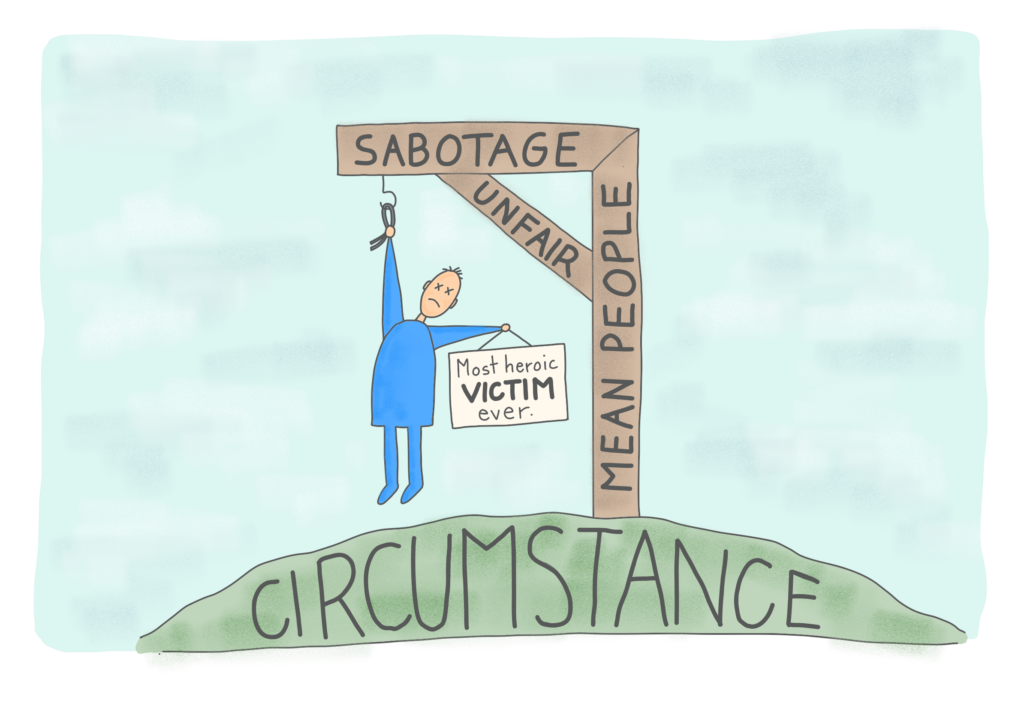
Intention and mastery without ownership leads to victimhood.
In the next article within the series, we’ll wrap up the full concept of serene performance. Read part 3 here.
P.S.
Coming back to my cooking success… My all-time favorite meal has 3 ingredients indeed. Pasta, tomatoes, parmesan. This gets me a long way.
Get in Touch
What’s on your mind today? Share your thoughts and let’s connect.